Every SaaS founder starts somewhere. For most, that somewhere is a freelance designer — someone reliable, reasonably priced, and available when a landing page or pitch deck needs a quick turnaround. For a while, this works fine.
Then the product grows. The marketing calendar fills up. And slowly, the same freelancer who used to be the fast option starts becoming the thing you're waiting on.
If that shift feels familiar, you're not imagining it. Here's what it usually looks like, and what it means.
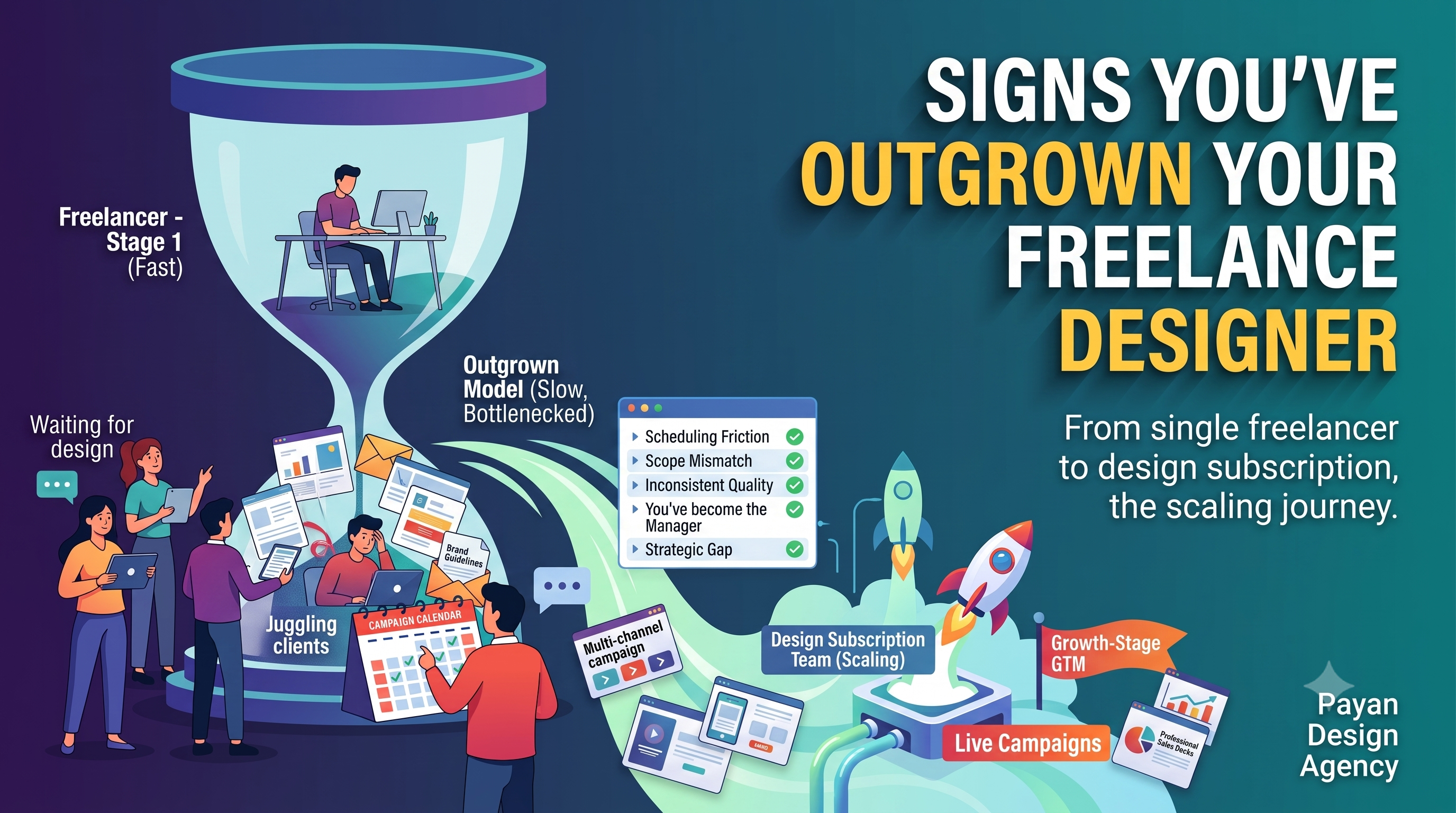
The first sign is scheduling friction. Early on, a request took a day or two. Now it takes a week, because your freelancer is juggling other clients alongside you. You're no longer their only priority, and understandably so. But your campaigns don't pause just because their calendar is full.
The second sign is scope mismatch. A freelancer is usually strong at one or two things, like landing pages or social graphics. But your needs have widened. You now need pitch decks, onboarding flow polish, email templates, and campaign systems all in the same month. One person, however talented, can't specialize in everything you now require.
The third sign is inconsistent quality across projects. Not because the freelancer got worse, but because their attention is split. The pitch deck gets their full focus this week. Your landing page redesign gets whatever time is left over. You start noticing the gap between your best asset and your average one, and buyers notice it too.
The fourth sign is that you've become the design manager. You're the one chasing updates, explaining brand guidelines again, and stitching together feedback across tools. What should be a five-minute check-in has turned into project management on top of your actual job.
The fifth sign is that decisions are slowing down. Early-stage design work is mostly execution. Growth-stage design work requires judgment: what to prioritize, what actually drives conversion, what's worth testing first. A freelancer optimized for fast turnaround isn't always positioned to make those calls with you.
None of this means your freelancer did anything wrong. It usually means your company simply grew past the model that worked for its first stage.
The teams that handle this well don't necessarily jump to a full-time hire. Full-time design comes with its own overhead: recruiting, management, ramp-up time, and a single point of failure if that person is out or leaves. What most growing SaaS teams actually need is more design capacity and more strategic range, without the weight of a full-time role.
This is where a design subscription model fits. Instead of one freelancer stretched across your entire design surface area, you get a small senior team that can flex across landing pages, product UI, sales collateral, and campaign assets, all without adding headcount or losing the speed that made freelancing appealing in the first place.
If any of the signs above sound like your current setup, it's worth asking not "do I need a full-time designer," but "does my current design capacity actually match where my company is now."